Sellers here already know their market moves fast. What most don't know is that speed creates a different kind of risk than the one they're braced for. It's not a low offer. It's a signed contract that stalls three weeks in, when a buyer's insurance underwriter reads the inspection report and asks a question nobody budgeted time to answer.
That's the mechanism worth understanding before you list, not after an offer is already on the table.
The Speed Everyone Already Knows About
Whitefish Bay's numbers are not subtle. Over the three months ending August 2026, the median sale price ran $692,000, up 7.9 percent from the same period a year earlier, and homes were selling in an average of 37 days. Inventory has stayed tight enough that well-presented homes routinely draw multiple offers within days of listing.
That's the part every seller has already heard. The 37-day average describes how long homes take to sell; after an offer is accepted, the inspection period, insurance quote, lender's underwriting, and any repair negotiation have to fit within the contract timeline. In a slower market, a wiring or plumbing surprise is an inconvenience. In this one, it's a scheduling collision.
What the Inspector Actually Finds Behind Whitefish Bay's Walls
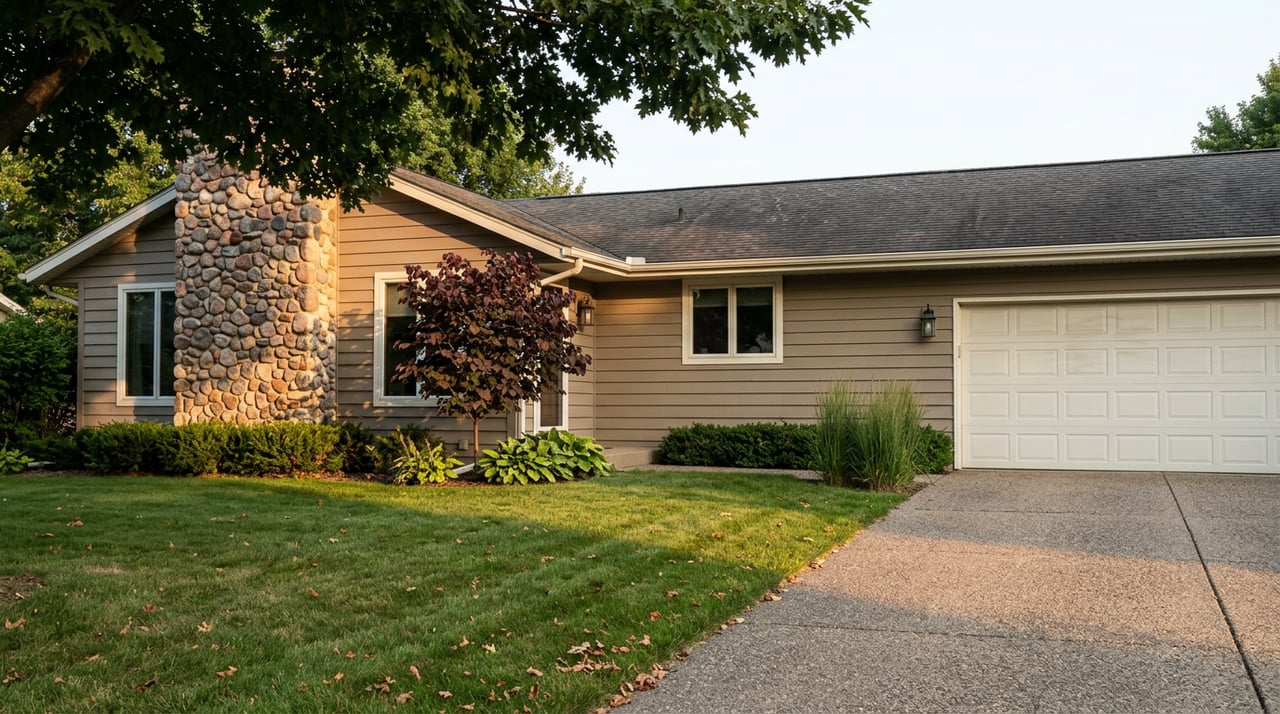
Whitefish Bay's charm comes from its age. Tree-lined streets like E. Fairmount and E. Henry Clay are lined with homes built well before 1940, and that same age is what shows up, with real consistency, on inspection reports.
| System | Common in homes from | What shows up on the report |
|---|---|---|
| Wiring | Pre-1940 construction | Knob-and-tube wiring still active in parts of the house, often mixed with later subpanels and added circuits |
| Supply pipe | Pre-1951 construction | Original galvanized steel pipe, now deteriorating from the inside |
| Sewer lateral | Homes 60 to 70+ years old | Clay tile lateral lines with root intrusion from mature trees |
| Heating | Pre-1940 construction | Steam or hot-water boilers feeding cast-iron radiators, still functional but original to the house |
None of these are automatic deal-breakers. Each one is common enough in this market that an experienced inspector expects to find at least one. The problem isn't the finding. It's what happens next, and how much runway you have left to deal with it.
Why the Wiring Item Is the One That Stalls Closings
Knob-and-tube wiring doesn't fail a home inspection by itself. It fails a mortgage closing when a buyer's insurance carrier won't write a policy on a house that still has it, and increasingly, that's exactly what happens. A growing number of homeowners insurance carriers now require knob-and-tube to be assessed or, in many cases, removed before they'll issue coverage.
If the inspection surfaces active knob-and-tube on day 10 of a 14-day contingency period, the buyer's agent now has to get an electrician out to assess it, get a quote for remediation, get the insurance carrier to sign off on a plan, and get all of that documented before the contract's financing deadline. In a market where the whole point of speed is momentum, that's the moment momentum stalls.
The sellers who avoid this aren't the ones who happen to have updated wiring. They're the ones who found out what an electrician would say before a buyer's inspector did.
The Sewer Lateral Is the Negotiation, Not the Wiring
If wiring is the item that threatens to blow up a timeline, the sewer lateral is the one that shows up in every repair negotiation. Homes 60 to 70 years and older in this market often still run on clay tile laterals, and those pipes are exactly what mature tree roots are built to find. A sewer scope, essentially a small camera run through the line, is what reveals whether the joints are intact or already compromised.
Angi says the homeowner is responsible for the sewer lateral connecting the house to the village main, not the village itself. That's not a hypothetical cost. If a scope turns up root intrusion or a partial collapse, it becomes a real repair estimate sitting on the negotiation table, usually a choice between a price credit, a pre-closing repair, or trenchless lining versus full excavation depending on severity.
A seller who orders their own scope before listing controls that number. A seller who waits for the buyer's inspector to find it is negotiating from a report they didn't write, on a timeline they don't control.
The Permit Clock Nobody Budgets For
Here's the detail that catches people off guard even when they've done everything right so far: the village's Building Services Department operates independently from the City of Milwaukee. It's a separate process with its own fee schedule, one that changed as of January 1, 2025 for electrical, plumbing, and HVAC permits specifically.
The village's own permit guidance puts the stakes plainly: "Failure to obtain proper permits will result in a four times permit fee." That is a consequence to account for when planning remediation: a rushed, unpermitted fix to satisfy a closing deadline can mean paying four times the permit fee.
The village recommends allowing up to 48 hours to schedule an inspection once work is done, which is workable if you plan for it and genuinely tight if you're trying to squeeze it into the back half of the closing timeline.
Getting Ahead of It Before You List
None of this is a reason to slow down in a market built on speed. It's a reason to spend a small amount of time before you list instead of a large amount of time after you're under contract.
- Get a licensed electrician's assessment of the wiring, specifically whether knob-and-tube is still active anywhere in the house, before a buyer's insurance carrier makes that discovery for you.
- Order your own sewer scope. A camera inspection of the lateral costs far less than a closing delay, and it gives you a real number to work with instead of a surprise.
- Pull your permit history for any past electrical, plumbing, or HVAC work, so a buyer's lender or inspector can see that prior updates were done and closed out properly, not left open.
- Document your heating system's service records, especially if you're running an original boiler. Steam and hot-water systems feeding cast-iron radiators are common in this market and are considered a maintained asset, not a liability, when the service history is there to prove it.
- Build in permit lead time if any remediation is likely. Assume the village's standard scheduling window, not the fastest-case scenario, when you're setting your own listing timeline.
None of this changes what your home is worth. It changes whether the number you negotiate on offer day is the number you actually close at.
A Few Questions Worth Asking Directly
Does having knob-and-tube wiring mean I can't sell my house? No. It means a buyer's insurance carrier will likely ask about it, and having your own electrician's assessment ready, rather than waiting for the buyer's inspector to raise it first, keeps you in control of the timeline and the conversation.
Why order a sewer scope before listing? A pre-listing scope is worth the modest cost.
Do I need a village permit for a minor electrical or plumbing repair? Whitefish Bay's Building Services Department maintains a reference list of what does and doesn't require a permit, and the village recommends calling ahead if you're unsure. Given the four-times penalty for unpermitted work, that's a five-minute phone call worth making before you start.
If you're weighing a sale in Whitefish Bay and want a clear read on what your home's specific wiring, plumbing, or heating history means for your timeline, Blue Violet Homes can walk through it with you and put together a straightforward plan for getting ahead of it. Request a free home valuation and let's talk about what's actually behind your walls before a buyer's inspector tells you.
This article is general information, not legal, tax or financial advice. Consult a qualified professional about your situation.